

Haz clic aquí para leer en español
Written by Fidgit
Anyone who commutes in Bolivia commits multiple death defying acts a day. Horns are used conversationally, gas pedals are applied until the moment brakes screech. Driving style leaves no mystery as to why every dashboard is a shrine, with emblems to Mother Mary, fuzzy dashboard covers, stuffed animals, etc.
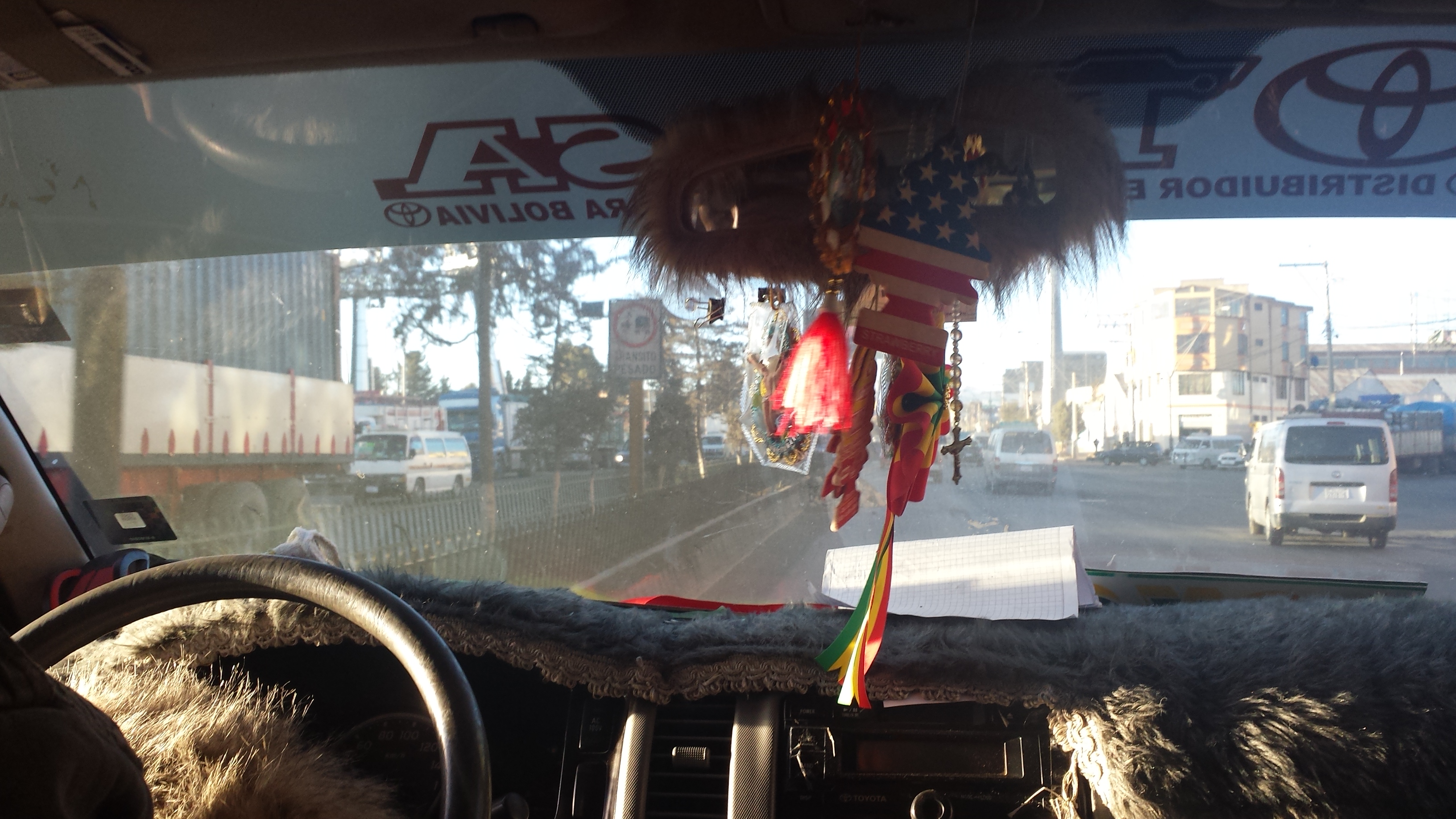
We continue to connect our steps across Bolivia but winter (June – August on the altiplano), water, and health issues caused us to make the decision to stay in the larger cities and shuttle out to the point we last stopped. Walking the day, and then returning to town each evening.
At first we considered attempting to rent a vehicle but a bit of research about frequent police bribery, high taxation rates on foreigners, and driving practices in the cities quickly scratched that idea. There is very little reason I see, as a visitor, to rent a car in Bolivia. If you do, hiring a local driver could save a lot of stress and isn’t all that much more expensive.
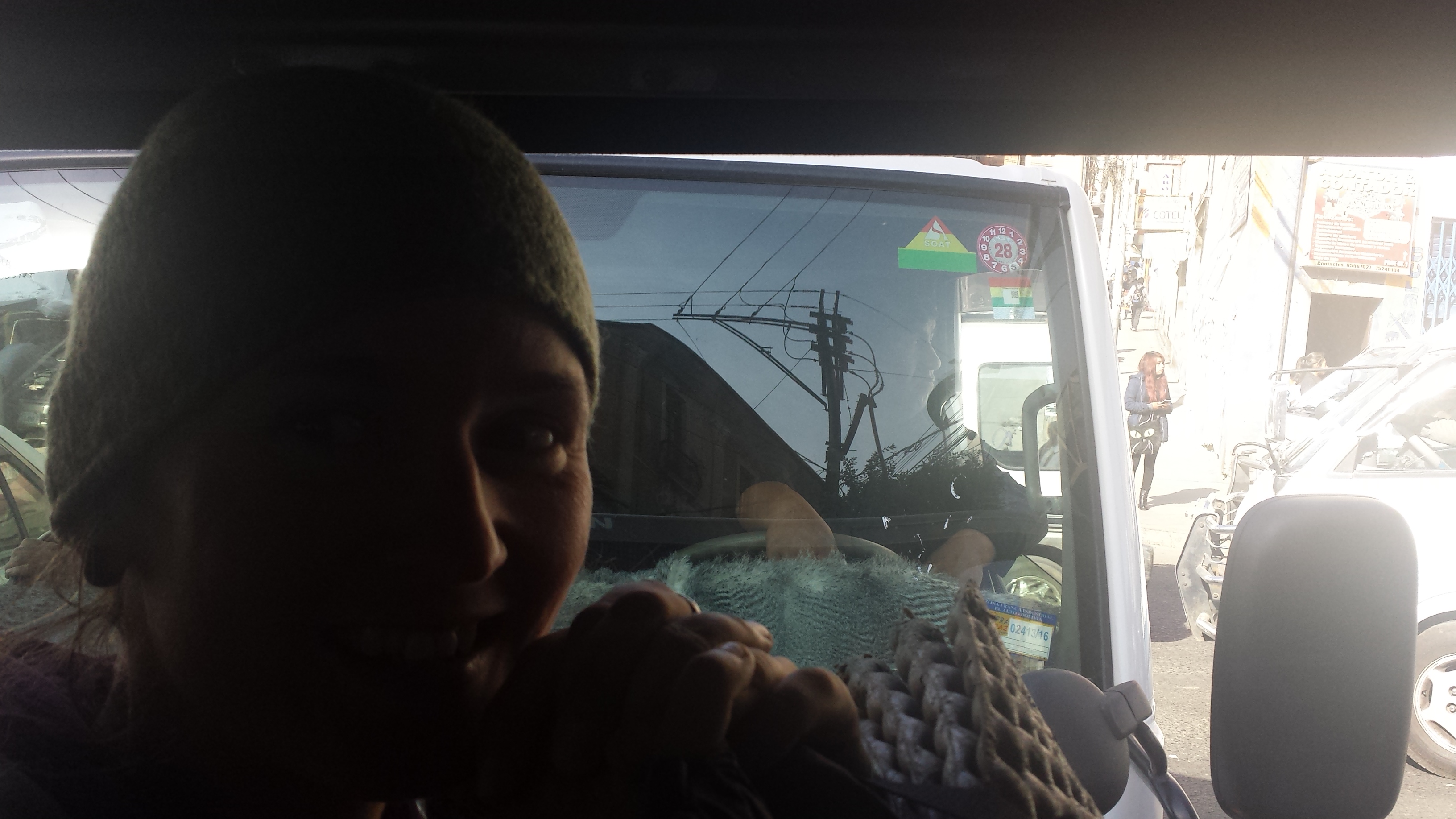
In the past month and a half we have become something of experts about transportation in Bolivia. Here is what we have learned:
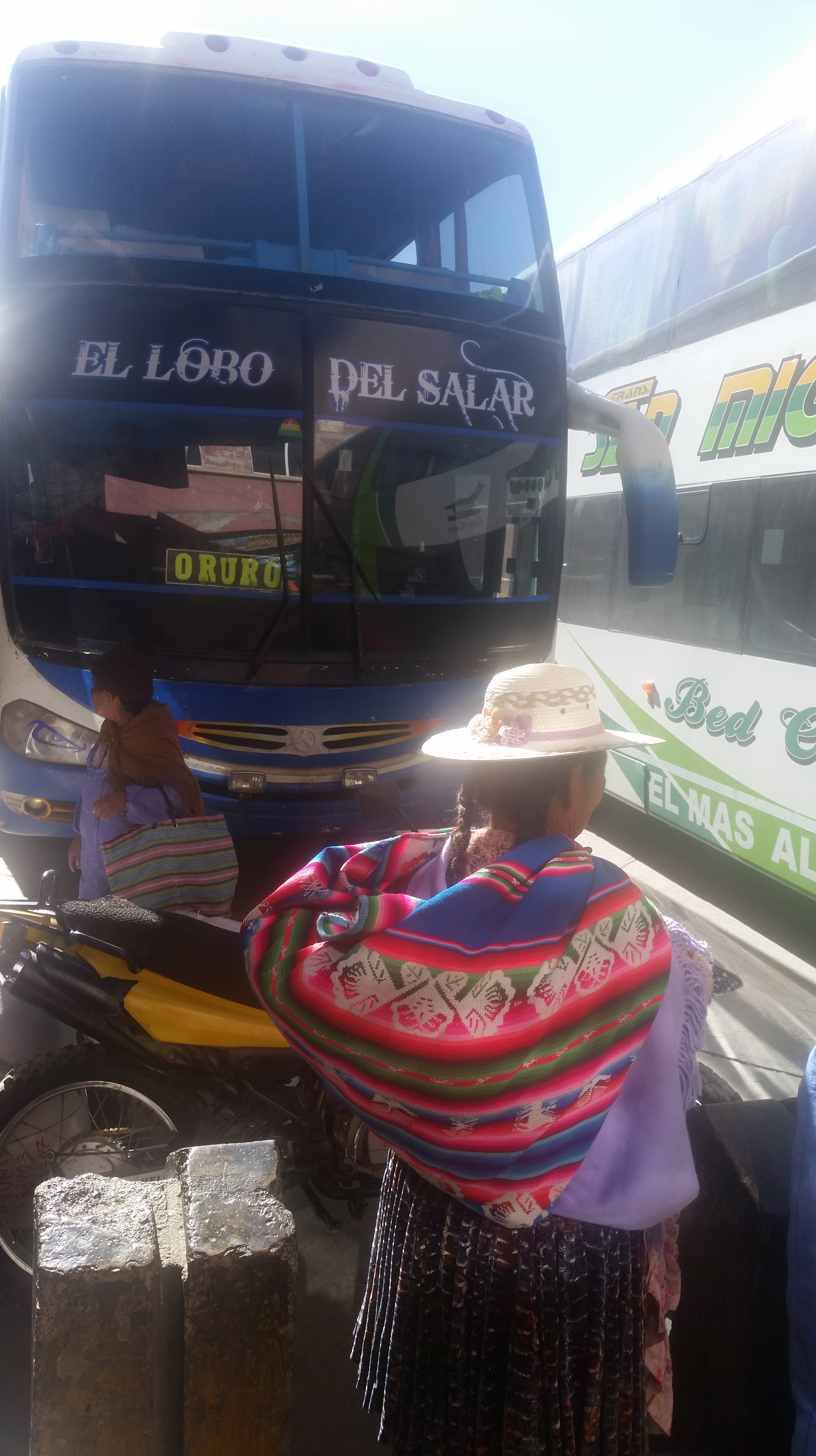
Buses & flotas- Long distance buses in South America are a far cry from those of North America. Here, for relatively cheap, you can cross countries in comfort. If, as a visitor, you ask about a bus, they are going to know what you mean. Generally as a tourist, this is going to be your travel go to.
A local distinction is that buses are generally the more comfortable form of travel (generally but not necessarily meaning: double-decker, bathroom on board, snacks and drinks, sometimes WiFi, working air vents, and sometimes a USB jack to charge your phone).
These will cost something in the 60 Bolivianos range, depending on where you are going.
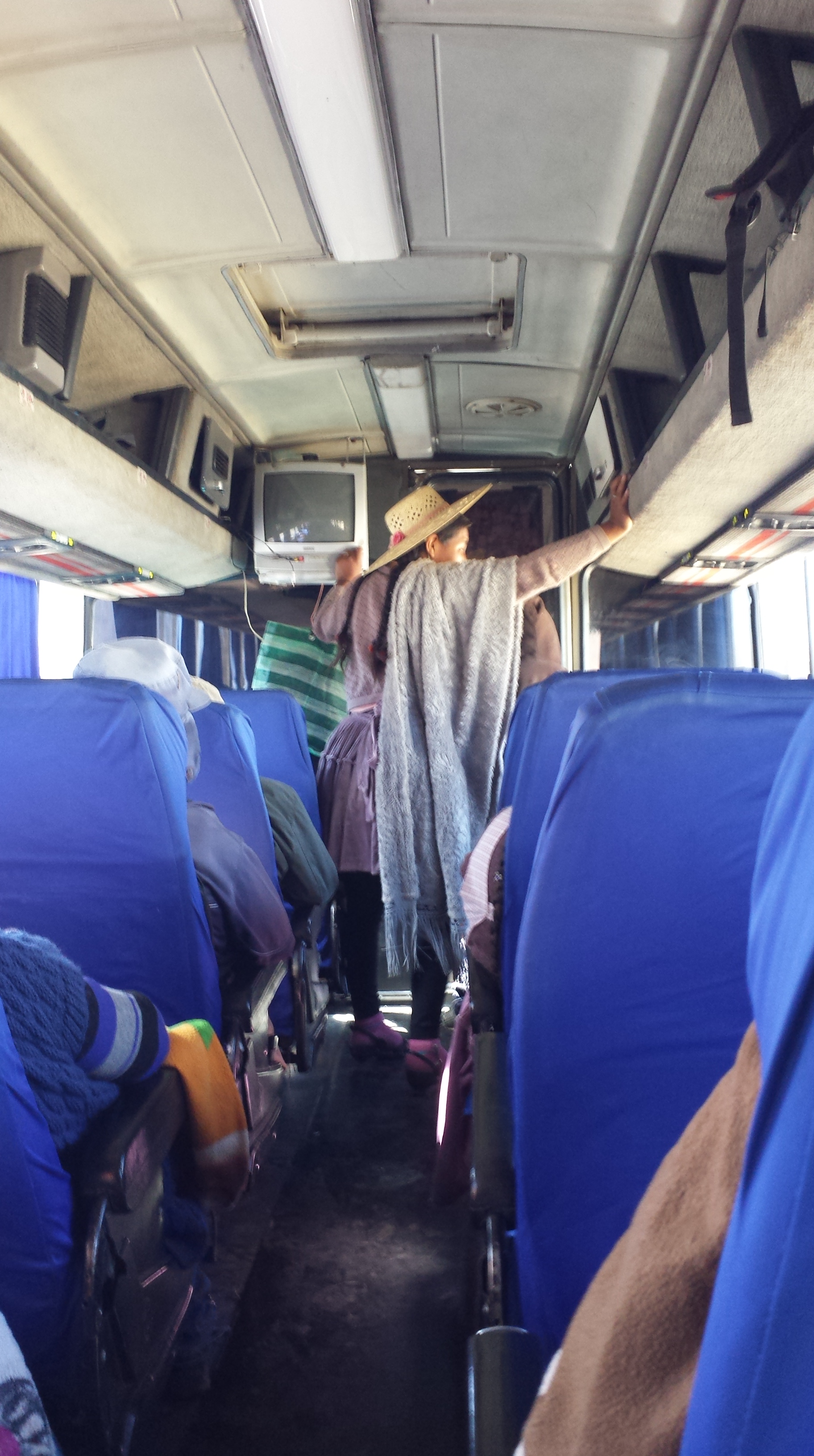
“Flotas” are the more worn down buses, usually driven by an individual and their family. We used them when we were heading for points around 100 km out of any large city because they will stop to drop you off at random points as requested while the buses are more intent on their destination. They are dirtier, seats are often broken, temperature is unregulated, and you get a lot more local flavor. There were plenty of times that we were the only gringas on a flota, besides whatever scantly clad white women were in the pirated action movies playing on the fuzzy little TV screen at the front of the bus.
These will cost between 15-30 Bolivianos, depending on where you are going.
Both generally leave from a central “terminal” where, in Bolivia at least, you will be expected to pay 2-3 Bolivianos for “terminal use.” You will also be expected to pay to use the bathroom. These areas are high frequency for theft, so keep an eye and hand on your gear at all times. We found that there were often people OUTSIDE the terminal selling tickets to flotas which were leaving almost immediately, as in, driving out the gate of the terminal and loitering to try to fill up. This avoids the terminal fee and can be the fastest way to get moving as they don’t usually leave the terminal until 20-60 minutes after scheduled departure time. Of course, this is an option only for flexible travelers.
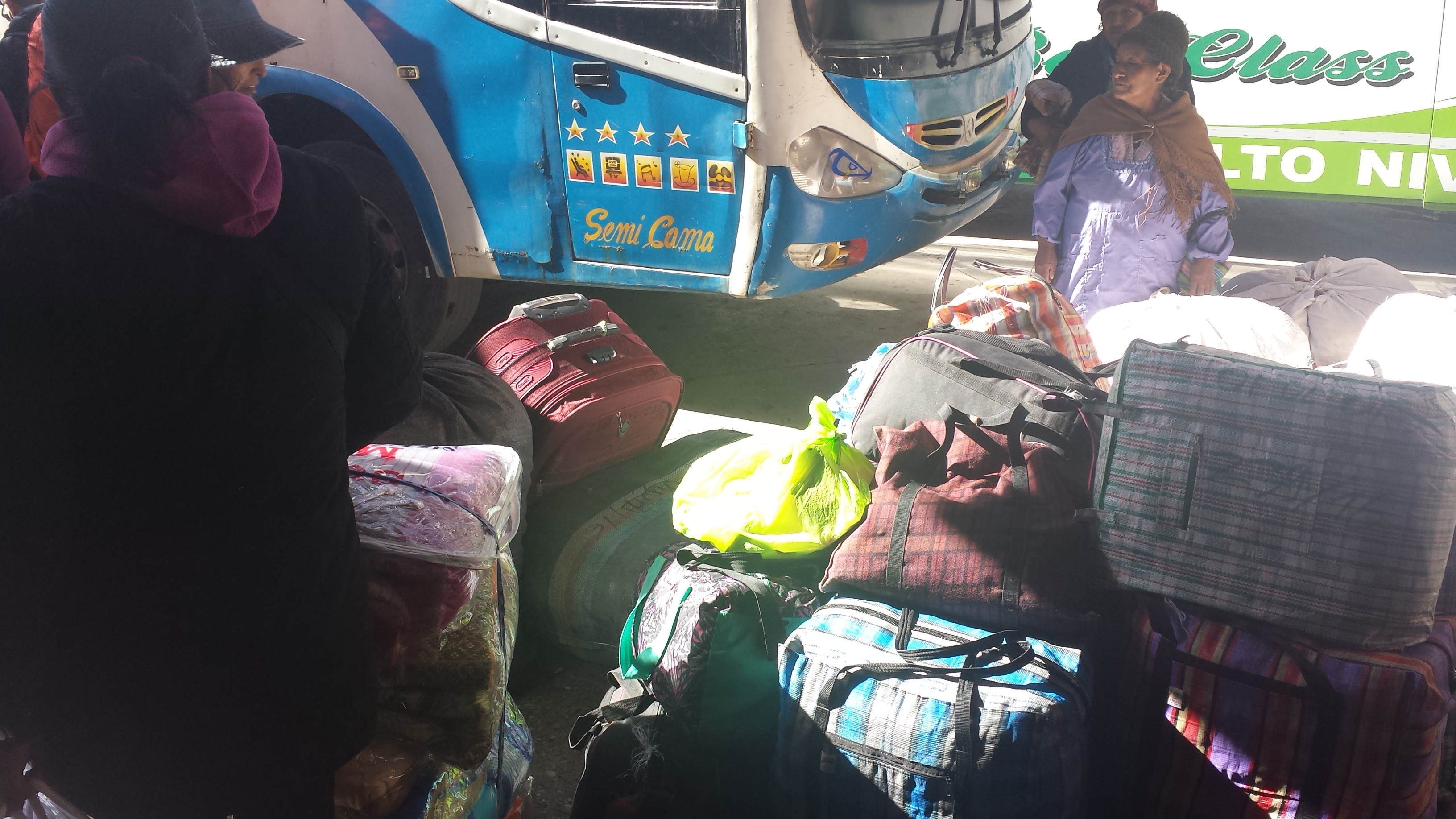
The schedules on these things are flexible, and if the route you are traveling is between tourist destinations, there are generally a number of transports per day. So, if you want scheduling security and comfort for a long trip, you want a bus. If you are looking to get between points quickly and flexibly and to brush elbows with local culture, try a flota.
Minis- These are small passenger vans which will fit 8-12 people in to cover short and mid distances. By subsidizing gas prices for Bolivians, the government has generated a flourishing private business industry. The streets here are packed with them and using them can be a dizzying experience which involves a lot of shouting, jostling, and brazen confidence.
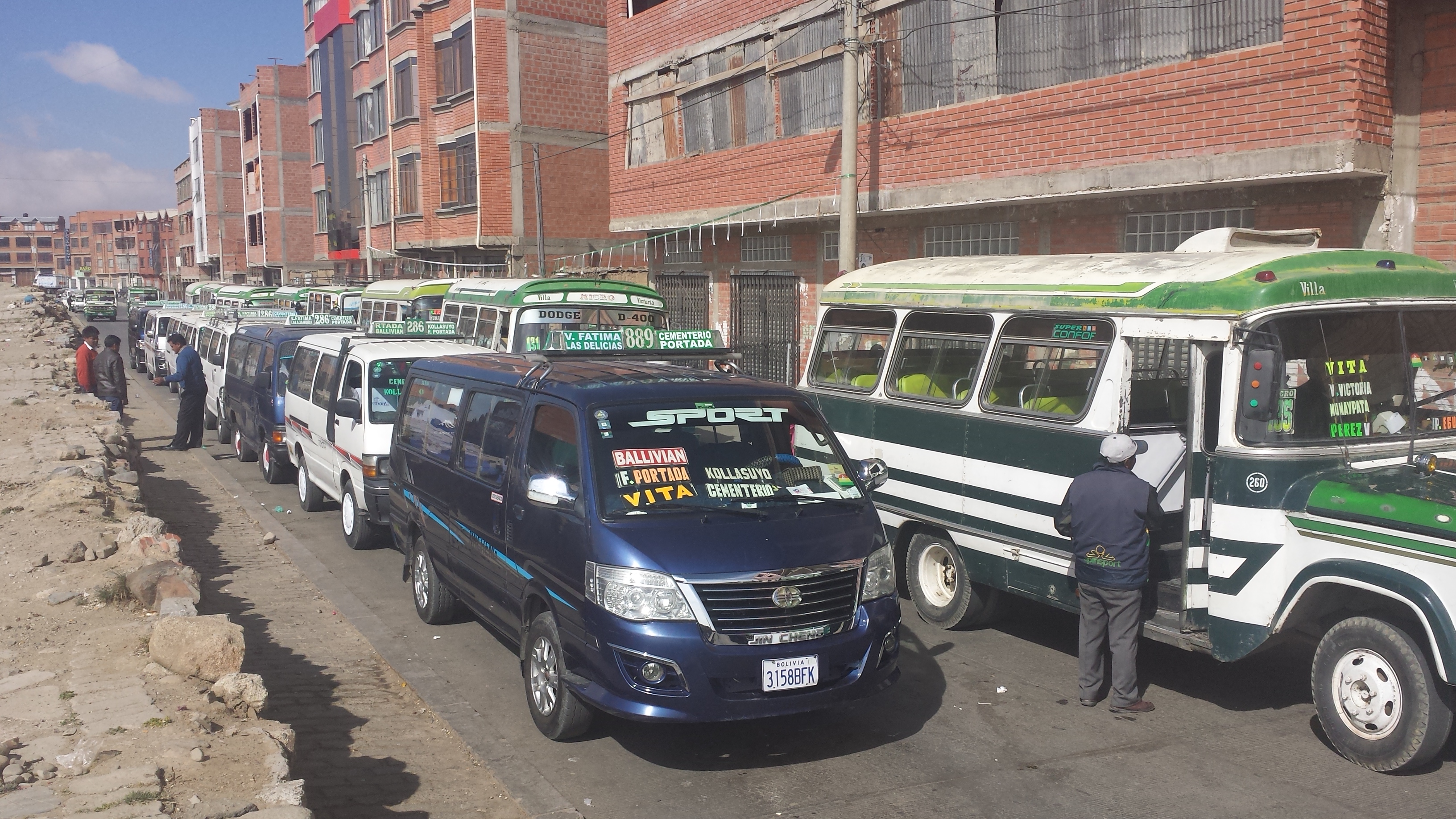
Minis are only for those with nerves of steel. You often have to stand out in the road to flag one down, recognize the cluster of small placards in the window which tell you where they are going, and be willing to hop off into traffic as well. I’m not even going to touch on what the drivers have to do.
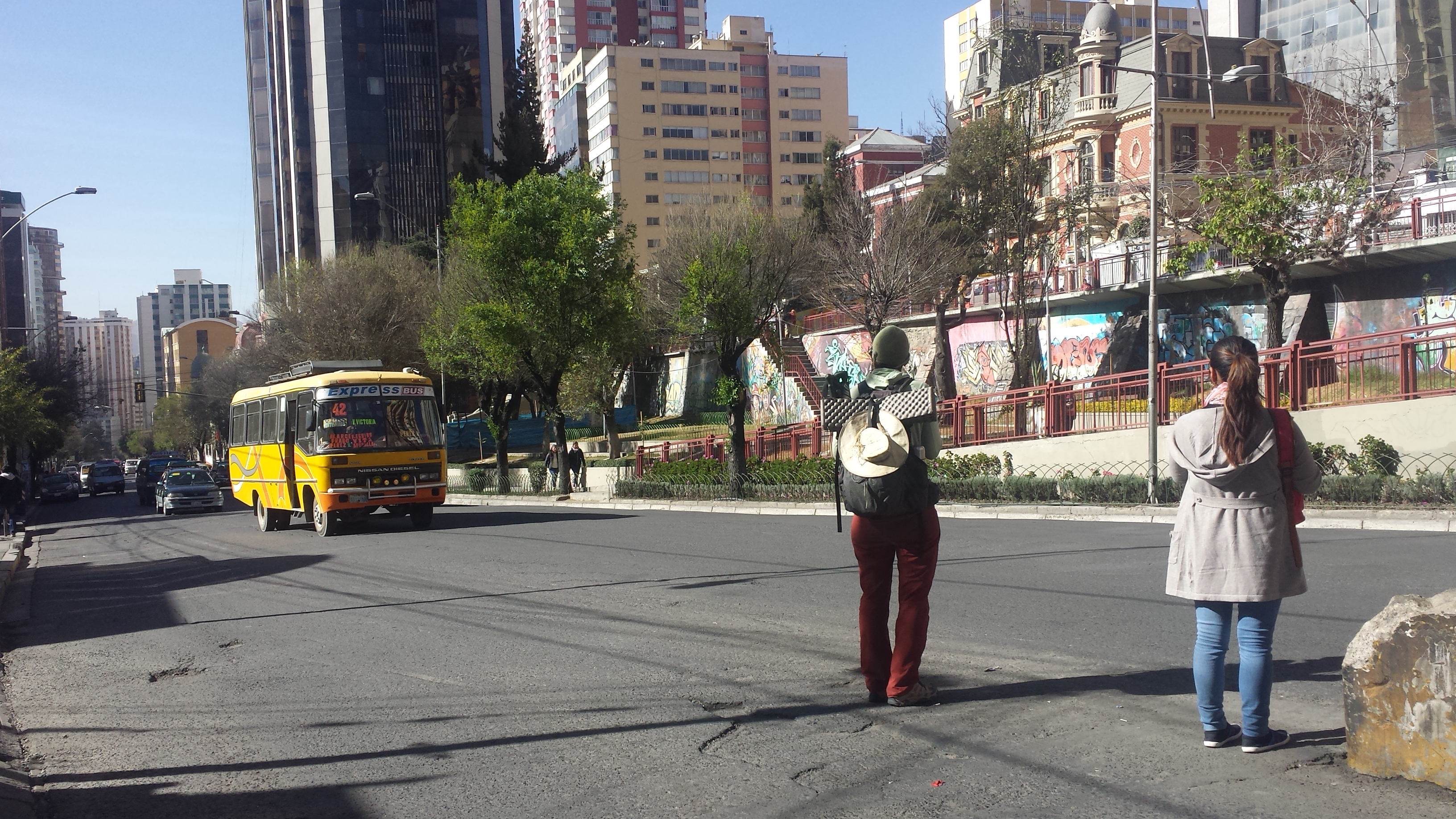
Minis should only be attempted if you have a grasp on the language and geography of the region. At the larger drop off points, where there are swarms of these vehicles and a milieu of humans, mini drivers will pay hustlers who stand in the street, or sometimes ride around in a seat by the door, shouting out the window about destinations, getting people in, and collecting fares.
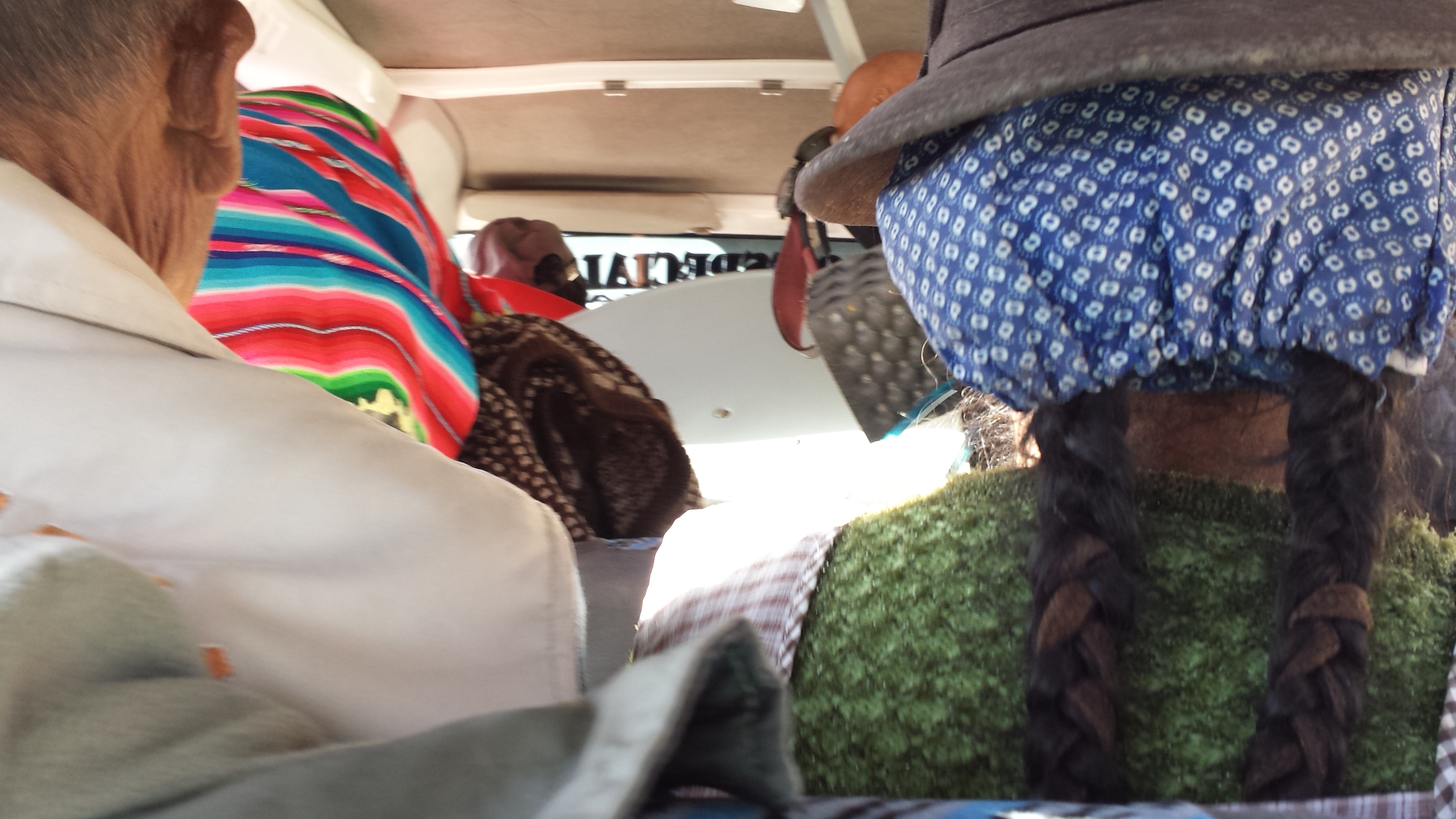
Most have the fares posted in the windows but they are generally between 2-3 Bolivianos within the city and up to 10 if you are going over 40 km outside of the city. When you want to get off just notify the driver or hustler about a block ahead and they will drop you off just about anywhere along the route.
Taxis- These range in quality. The “official” taxis generally cost about twice as much (40 Bolivianos to go half way across La Paz) as the regular taxis (20 Bolivianos). Interestingly, they are not run by meters, and they charge per person. If you are going to take a taxi and have just arrived in a city, say, at the terminal, and have the time and energy, ask at several different taxi windows what the price will be to your destination, this should give you a feeling as to what is a fair price. If they see the chance to overcharge, they will, but if you know the going rates and just pass up the amount, they accept; if you ask the price, it is an invitation to inflate . . .
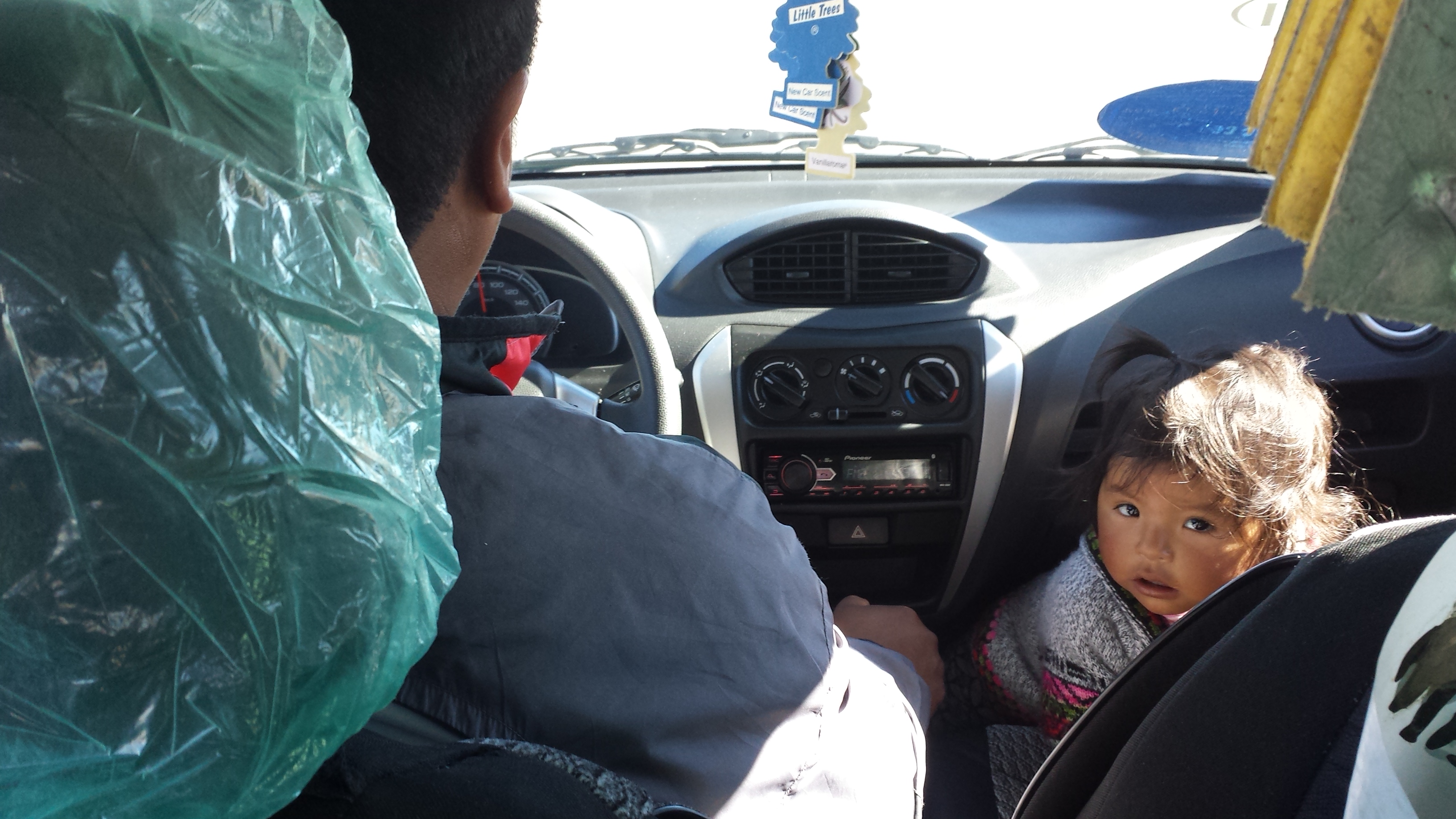
Hitch-hiking- Most of the vehicles you will see passing in Bolivia are either mining trucks or minis. There are relatively few private vehicles here. If you do happen to hitch one, it is still customary to pay the driver. Consider it pitching in on gas. As a foreign traveler here, you undoubtedly have more money than the driver does; so, don’t scoff, do contribute (depending on the distance, generally around 10 Bolivianos).
Vehicular travel in Bolivia is a death defying act at every turn. Evo Morales (President) has a series of nice new highways being built, largely to access mines. Of the traffic we have seen passing us all day outside of the cities while walking, I’d say 35% are mine trucks, 30% are minis, 25% are buses and flotas, and 10% are private vehicles, but that is just loose hiker math.
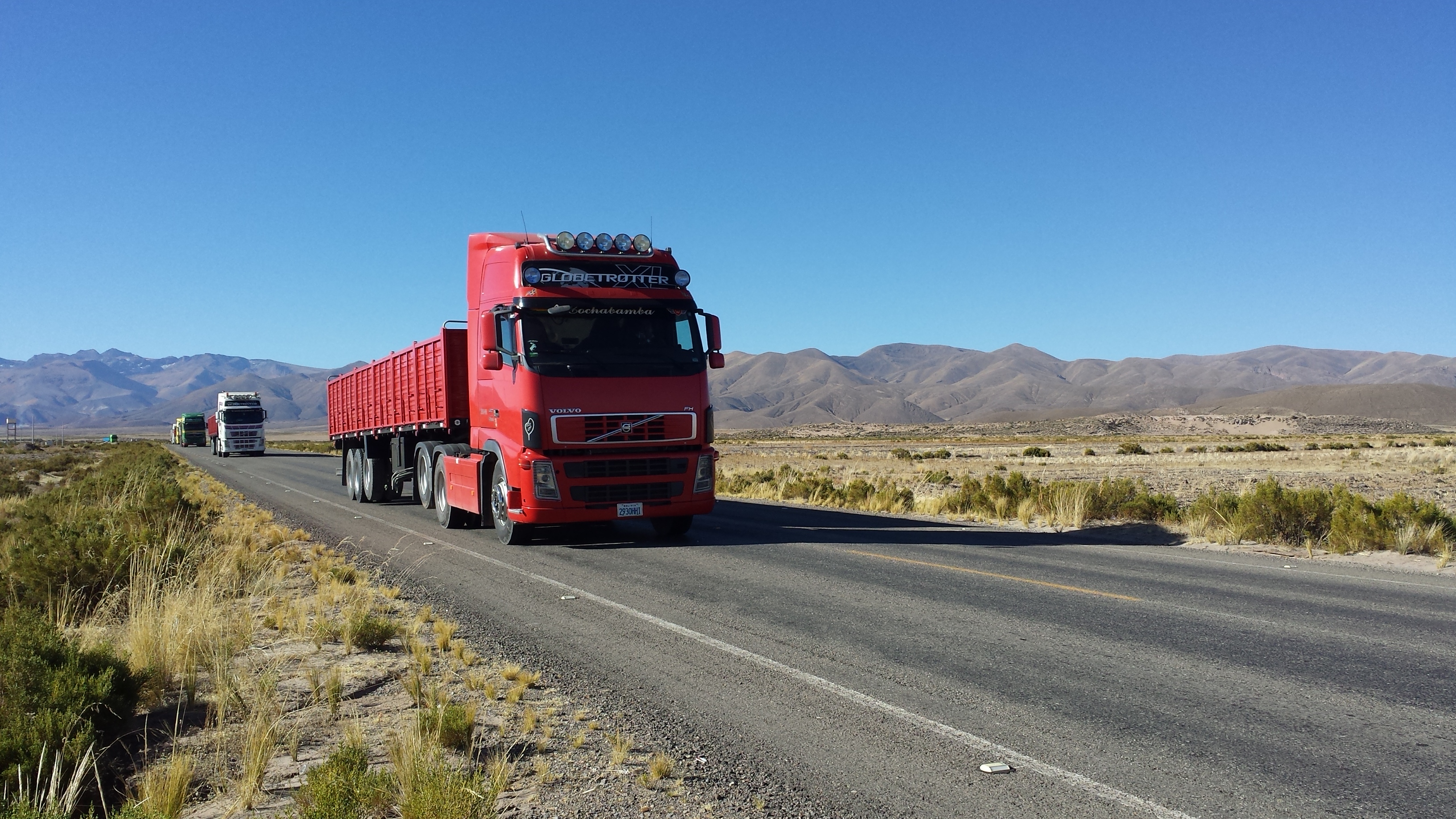
Come see for yourself, I dare ya.
Bolivia: Transporte
Escrito por Fidgit
Traduccion por Henry Tovar
Cualquier persona que viaje en Bolivia comete varios actos que desafían la muerte al día. Los cuernos se usan conversacionalmente, los pedales de gas se aplican hasta el momento que los frenos chillan. El Estilo de manejar no deja ningún misterio en cuanto a por qué cada tablero de instrumentos es un santuario, con emblemas a la Madre María, las cubiertas de tablero borrosa, animales de peluche, etc
Seguimos conectando nuestros pasos a través de Bolivia, pero el invierno (junio – agosto en el altiplano), el agua y los problemas de salud nos hicieron tomar la decisión de quedarnos en las ciudades más grandes y trasladarnos hasta el último punto de parada. Caminar el día, y luego volver a la ciudad cada noche.
Al principio pensamos en tratar de alquilar un vehículo, pero un poco de investigación sobre el soborno frecuente de la policía, las altas tasas impositivas de los extranjeros y las prácticas de conducción en las ciudades rápidamente rayaron esa idea. Hay muy poca razón que veo, como visitante, alquilar un auto en Bolivia. Si lo hace, la contratación de un conductor local podría ahorrar mucho estrés y no es mucho más caro.
En el último mes y medio nos hemos convertido en expertas en transporte en Bolivia. Esto es lo que hemos aprendido:
Autobuses y flotas- Los autobuses de larga distancia en América del Sur están muy lejos de los de Norteamérica. Aquí, para relativamente barato, usted puede cruzar países en comodidad. Si, como visitante, le preguntas acerca de un autobús, van a saber lo que quieres decir. Generalmente como un turista, este sera el método preferido para viajar.
Una distinción local es que los autobuses son generalmente la forma más cómoda de viajar (en general, pero no necesariamente significado: doble piso, baño a bordo, aperitivos y bebidas, a veces WiFi, ventiladores de aire de trabajo ya veces un conector USB para cargar su teléfono) .
Éstos costarán algo en la gama de 60 Bolivianos, dependiendo de adonde usted va.
“Flotas” son los autobuses más desgastados, conducidos generalmente por un individuo y su familia. Los usamos cuando íbamos a puntos alrededor de 100 km de cualquier ciudad grande porque se detendrá para dejarlo en puntos aleatorios como se solicitó, mientras que los autobuses están más decididos en su destino. Son más sucios, los asientos son a menudo roto, la temperatura no está regulada, y te dan mucho más sabor local. Había un montón de veces que éramos las únicas gringas en una flota, además de las mujeres blancas escasamente vestidas estaban en las películas de acción pirateadas jugando en la pequeña pantalla de TV borrosa en la parte delantera del autobús.
Estos costarán entre 15-30 Bolivianos, dependiendo de donde usted va.
Ambos suelen salir de una “terminal” central donde, al menos en Bolivia, se espera que pague 2-3 bolivianos por “uso terminal”. También se espera que pague para usar el baño. Estas áreas son de alta frecuencia para el robo, así que mantener un ojo y la mano en su equipo en todo momento. Encontramos que a menudo había gente fuera de la terminal vendiendo boletos a flotas que estaban dejando casi inmediatamente, como en, conduciendo fuera de la puerta de la terminal y merodeando para tratar de llenar. Esto evita la tarifa de terminal y puede ser la manera más rápida de moverse ya que no suelen salir de la terminal hasta 20-60 minutos después de la hora de salida programada. Por supuesto, esta es una opción sólo para viajeros flexibles.
Los horarios de estas cosas son flexibles, y si la ruta que está viajando es entre los destinos turísticos, hay generalmente un número de transportes por día. Por lo tanto, si desea que la programación de seguridad y comodidad para un largo viaje, desea un autobús. Si usted está mirando para conseguir entre puntos rápidamente y flexible y para cepillar los codos con la cultura local, intente una flota.
Minis– Estas son pequeñas furgonetas de pasajeros que caben 8-12 personas para cubrir distancias cortas y medias. Al subsidiar los precios del gas para los bolivianos, el gobierno ha generado una floreciente industria de negocios privados. Las calles aquí están llenas de ellos y su uso puede ser una experiencia vertiginosa que implica una gran cantidad de gritos, empujones y descarada confianza.
Minis son sólo para aquellos con nervios de acero. A menudo tienes que destacar en el camino a la bandera uno hacia abajo, reconocer el grupo de pequeños carteles en la ventana que le dicen a dónde van, y estar dispuestos a saltar en el tráfico también. Ni siquiera voy a tocar lo que los conductores tienen que hacer.
Minis sólo se debe intentar si usted tiene una comprensión de la lengua y la geografía de la región. En los puntos más grandes de caída, donde hay enjambres de estos vehículos y un montón de seres humanos, los conductores del mini le pagan a alguien que se para en la calle, o a veces pasean alrededor en un asiento al lado de la puerta, gritando por la ventana sobre destinos, personas, y recolección de tarifas.
La mayoría tienen las tarifas fijadas en las ventanas pero son generalmente entre 2-3 Bolivianos dentro de la ciudad y hasta 10 si usted va más de 40 kilómetros fuera de la ciudad. Cuando usted desea conseguir apenas notifique al conductor o al hustler sobre una manzana delante y le dejarán apagado apenas alrededor dondequiera a lo largo de la ruta.
Taxis – Estos varían en calidad. Los taxis “oficiales” generalmente cuestan alrededor del doble (40 bolivianos a mitad de camino en La Paz) como los taxis regulares (20 bolivianos). Curiosamente, no son ejecutados por metros, y cobran por persona. Si usted va a tomar un taxi y acaba de llegar a una ciudad, por ejemplo, en la terminal, y tener el tiempo y la energía, pregunte en varias ventanas de taxi diferente cuál será el precio de su destino, esto debería darle una sensación en cuanto a lo que es un precio justo. Si ven la oportunidad de sobrecargar, lo harán, pero si usted sabe las tarifas y simplemente pasar la cantidad, aceptan; si usted pide el precio, es una invitación a inflar. . .
Hitch-hiking– La mayoría de los vehículos que usted verá el pasar en Bolivia son mineros de la explotación minera o minis. Hay relativamente pocos vehículos privados aquí. Si usted sucede al enganche uno, todavía es costumbre pagar al conductor. Considere la posibilidad de lanzar en el gas. Como viajero extranjero aquí, sin duda tienes más dinero que el conductor; así, no se burlan, contribuyen (dependiendo de la distancia, generalmente alrededor de 10 bolivianos).
El viaje vehicular en Bolivia es un acto que desafía a la muerte en todo momento. Evo Morales (Presidente) tiene una serie de buenas carreteras nuevas que se están construyendo, en gran medida para acceder a las minas. Del tráfico que hemos visto pasándonos todo el día fuera de las ciudades al caminar, diría que el 35% son camiones mineros, el 30% son minis, el 25% son autobuses y flotas, y el 10% son vehículos privados, pero eso es solo matemática de excursionista suelto.
Ven a verlo por ti mismo, te reto.



Comments (5)
I remember learning the hard way that busses in Quito don’t come to a complete stop for men to get off. You have to jump and hit the ground running in the right direction!
Hmm. that is what i was looking for about Bolivia. Transportation is the first need anywhere you go. Must research before your travel in any country, region, city.
Just for you to know taxis in La Paz don’t charge per person, they do by distance.In Cochabamba they charge both (distance and per person, but is generally cheaper than La Paz since the city is small).
They did seem to have sort of “ranges” of distance for prices. We also found that “official” taxis were about twice as much as regular taxis and in La Paz many had a small radio hanging from their rear view mirrors.
Thank you for your insight!
As we have entered Peru we’ve found the 3 wheel “moto taxis” particularly interesting to watch zip around the towns!
Pingback: Economics of a ‘Bolqueo’ – Her Odyssey