
Haz clic aquí para leer en español
Written by Fidgit
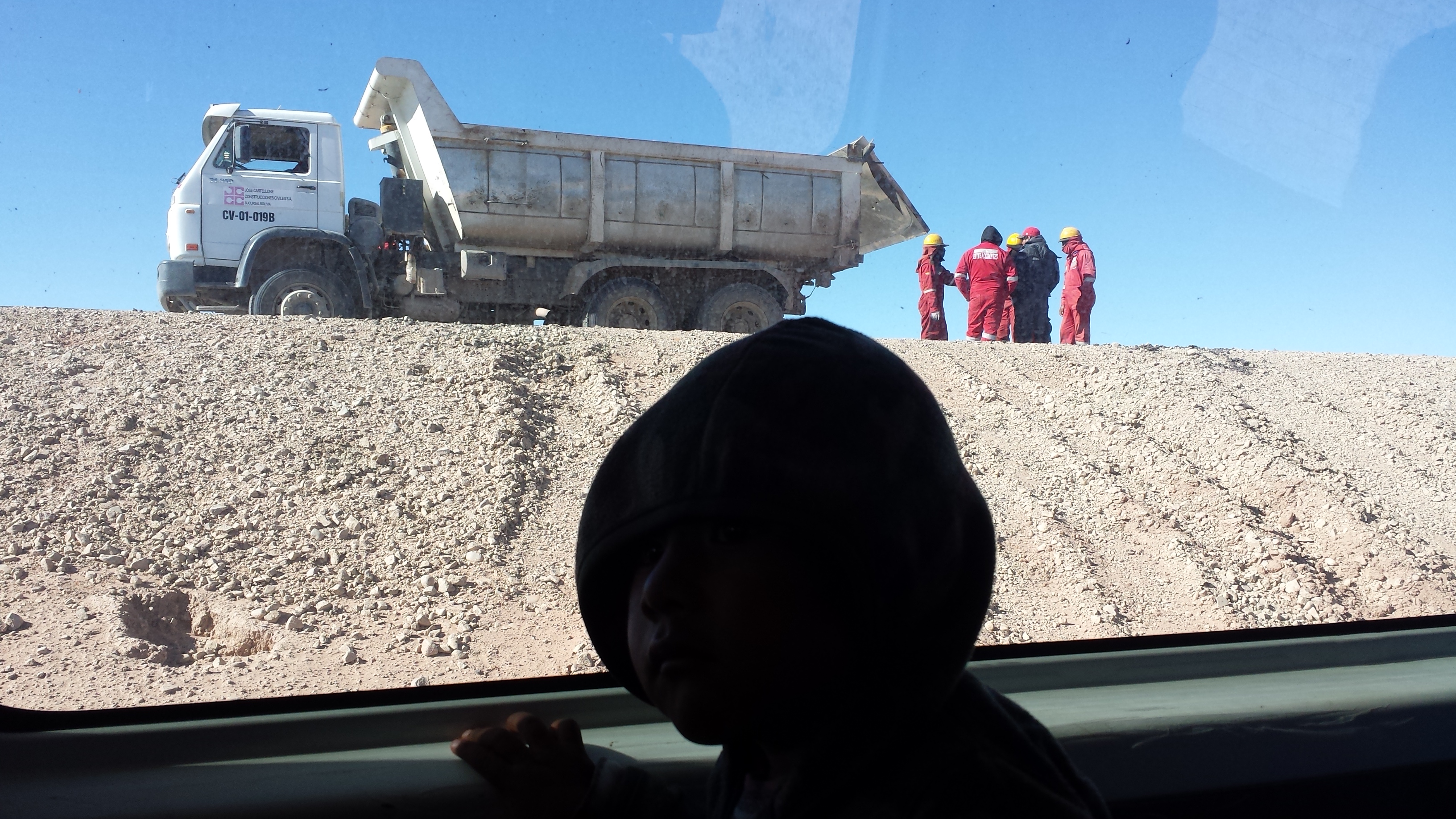
It was around midnight, we were hitching back to town from a day of roadwalking and were picked up by a mine truck driver. “When they can, families delay sending their boys into the mines until we have graduated from secondary school,” he peers ahead into the darkness across the comically large steering wheel of the semi, “because once you start going under ground, you only have 10 or 20 good years of life left. But most go underground around the age of 15 because their family needs the money.”
“It is the breathing that kills them, the mines give us masks but after a while, the men quit wearing them, they get in the way.” His father and brothers worked in the mines around Huanuni, the largest tin mine in the country. As the youngest of 9 children, he got lucky; he’s a driver.
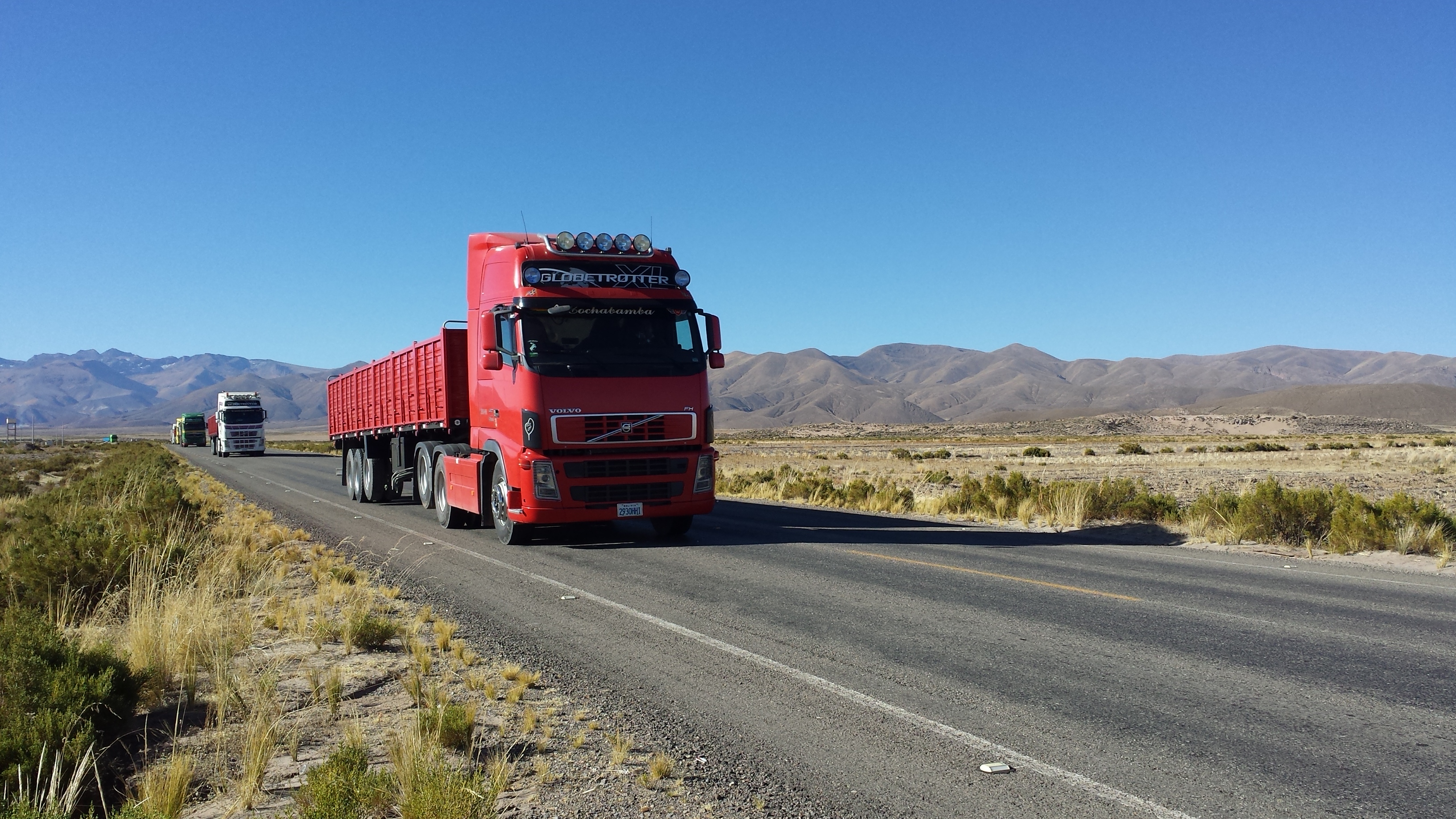
Bolivia is the highest country in South America, sitting atop massive reserves of natural minerals and energy resources, yet it remains the continent’s poorest country. Mining accounts for almost 30% of Bolivia’s exports, its second largest source of income. The Santa Isabel deposit in Potosí hosts some 40 million tons of ore containing silver, lead, zinc, tin, and gold. The Salar de Uyuni sits on 5.4 million tons of Lithium, the largest known concentration, estimated to be about half the world’s supply.

But Bolivians simply refer to it all as “minerals,” and everyone has at least one family member who works in the mines. While walking, we have seen a number of small, personal operations, dug by hand and shovel; we have also passed massive, tiered complexes with entire cities built around them.
“Vicuñas are not supposed to be hunted here,” he starts back up, seeming to randomly switch topics to the ubiquitous and skittish camelid which populates these high planes, “but people hunt them anyway, because the miners believe that if you drink a vicuña’s blood, you get another 5 years of life. Also, their fur is very warm, so it is valuable. A vicuña blanket costs about 7000 Bolivianos (~$1000 USD).”
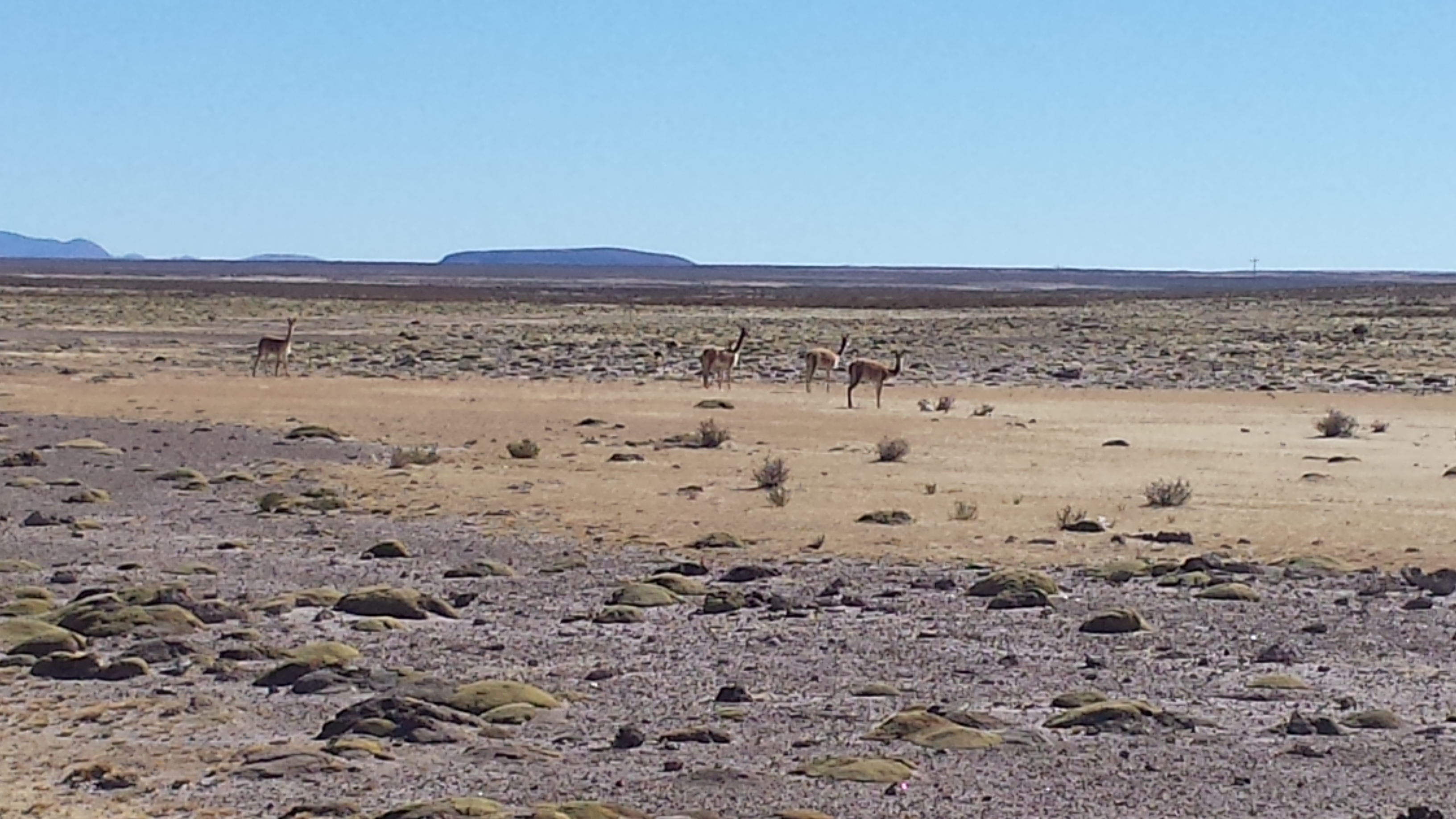
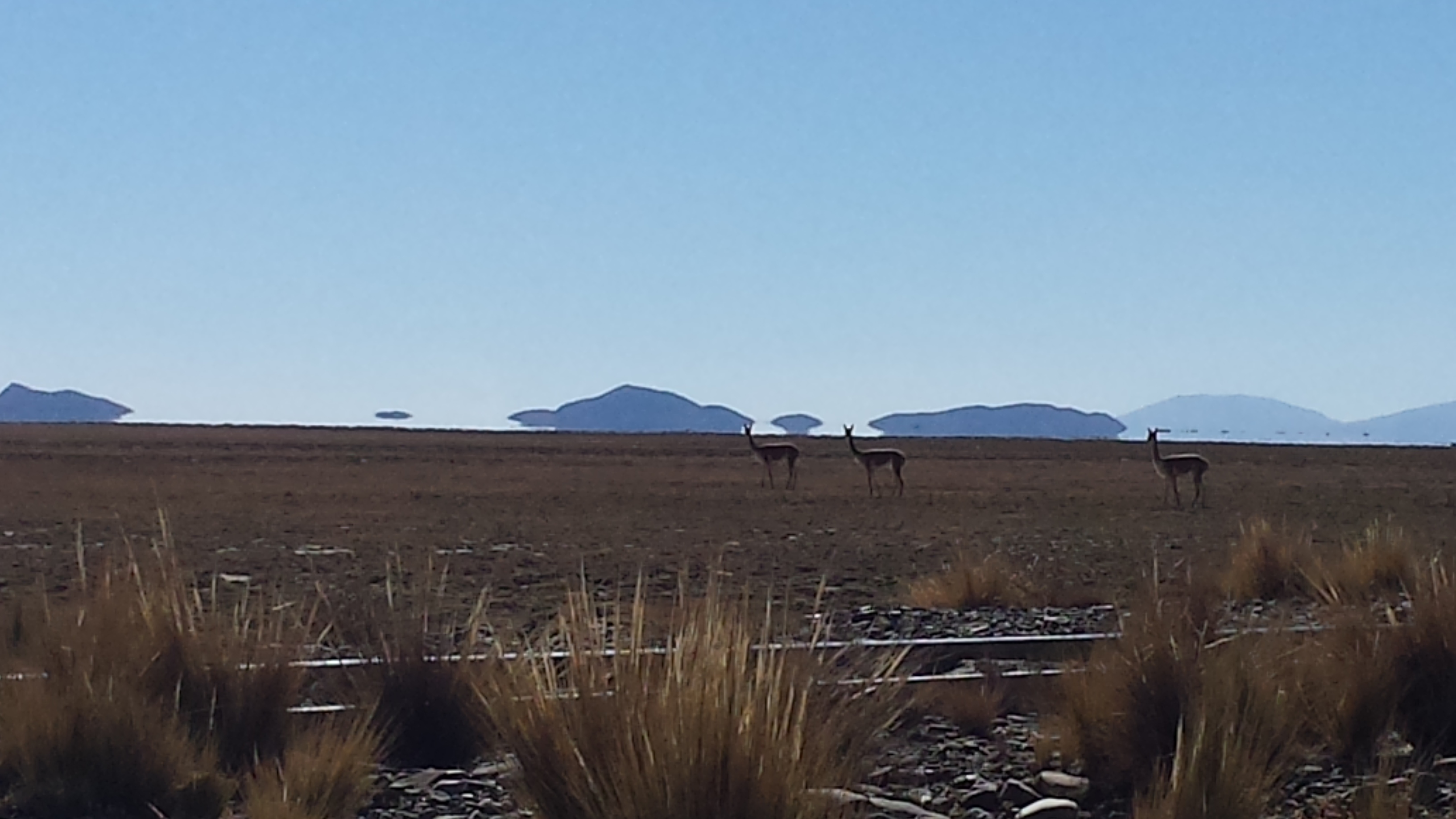
The vicuña are a cousin to the ganaco, alpaca, and Bolivia’s national animal, the llama.
There is a lot nationalized in Bolivia, as the President these past 11 years is heavily leftists and socialist. Ever since Eduardo Rodriguez, the former President (who according to popular consensus stole millions of dollars before making off to the USA), the indigenous vote, which comprise 62% of Bolivia’s population, elected Evo Morales, their first leader of indigenous decent and a “tri-lingue” (speaking all three of the main languages in Bolivia: Spanish, Aymara, and Quechua).
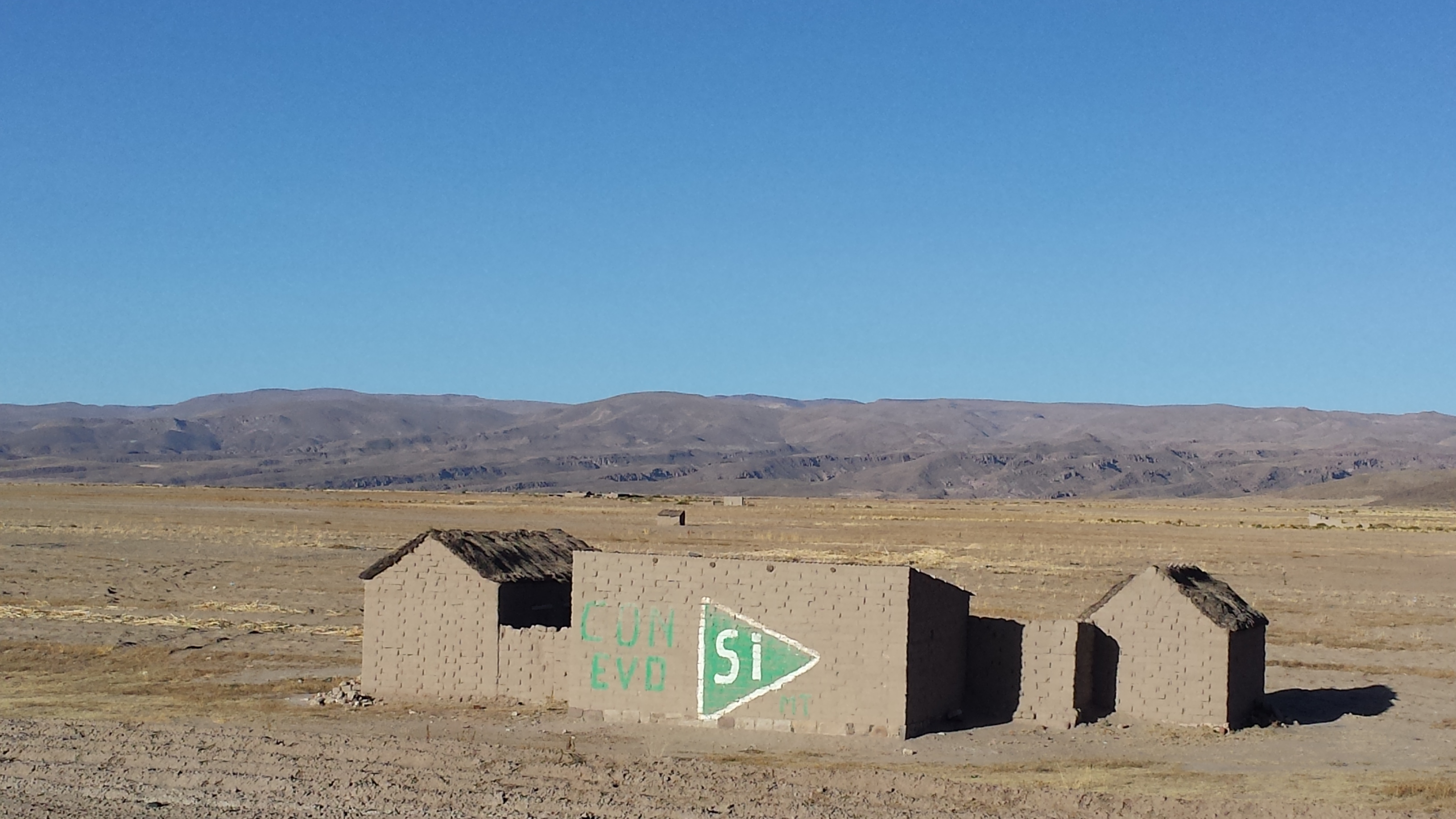
He has made strides in transport infrastructure (improved roads, railroads, and the new La Paz gondola system ‘mi teleferico’), increasing general quality of life of the average Bolivian (maternal and infant mortality rates have dropped and life expectancy has been increasing), and made mining a central tenant.
While he is regarded with skepticism by international businesses and many outside countries, most Bolivians we have talked to love him. The legends around this man are told with relish and are relatable to the average Bolivian: his impoverished upbringing, only carrying a high school education, cutting the presidential salary by over 75% as soon as he took office, benevolent responses to harsh action by neighboring countries; we hear at least one such story for every time we hitch-hike. He is one of them, and they feel they finally have a voice and their best interest is being looked after.
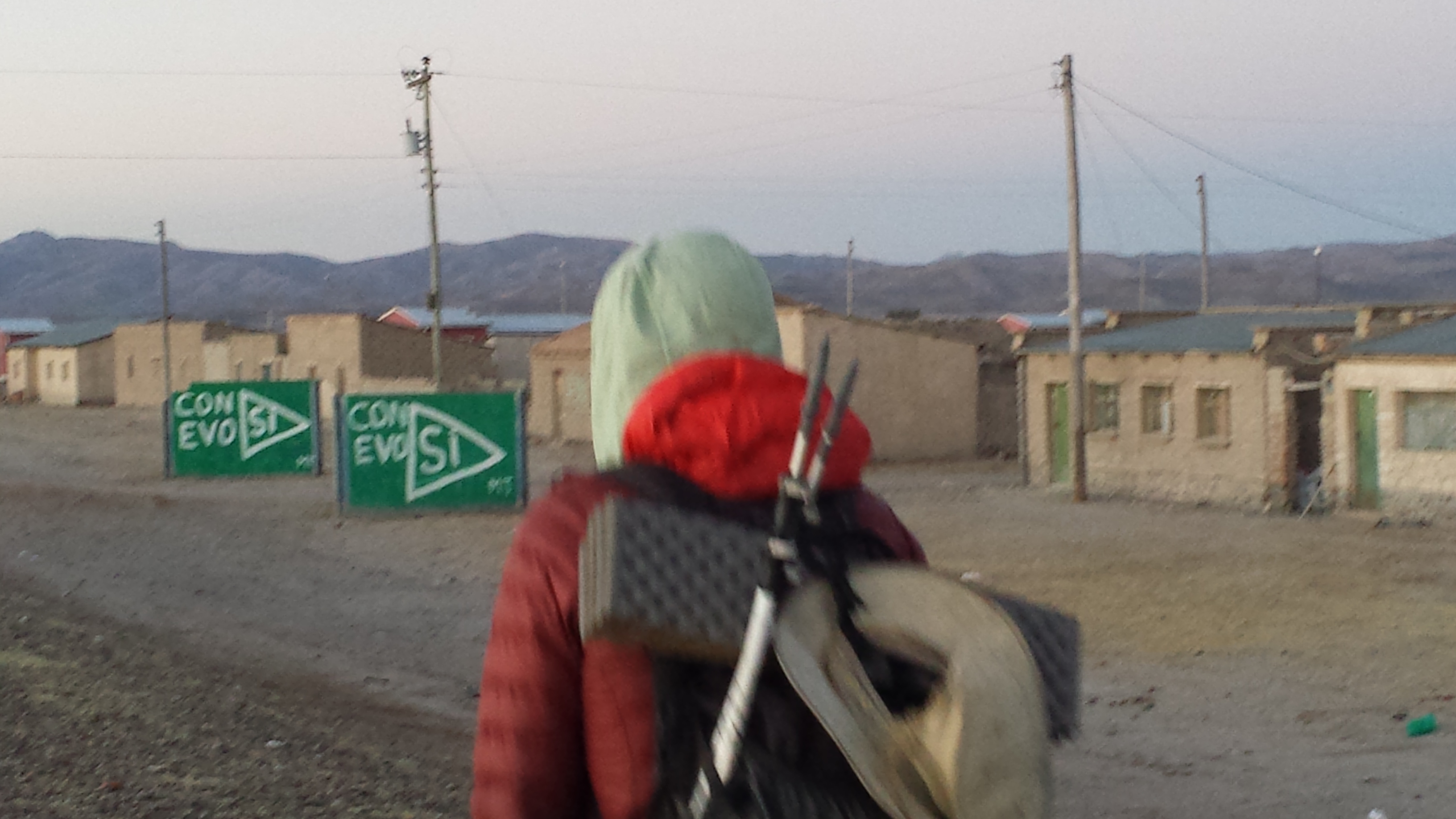
“If he gets elected again in 2020, he will probably just remain our President,” our driver shrugs.
“Who did you vote for?” I inquire.
“I vote blank. Voting is mandatory, if you don’t vote, you can’t get money out of the bank. So, whoever checks my card just fills it in.”
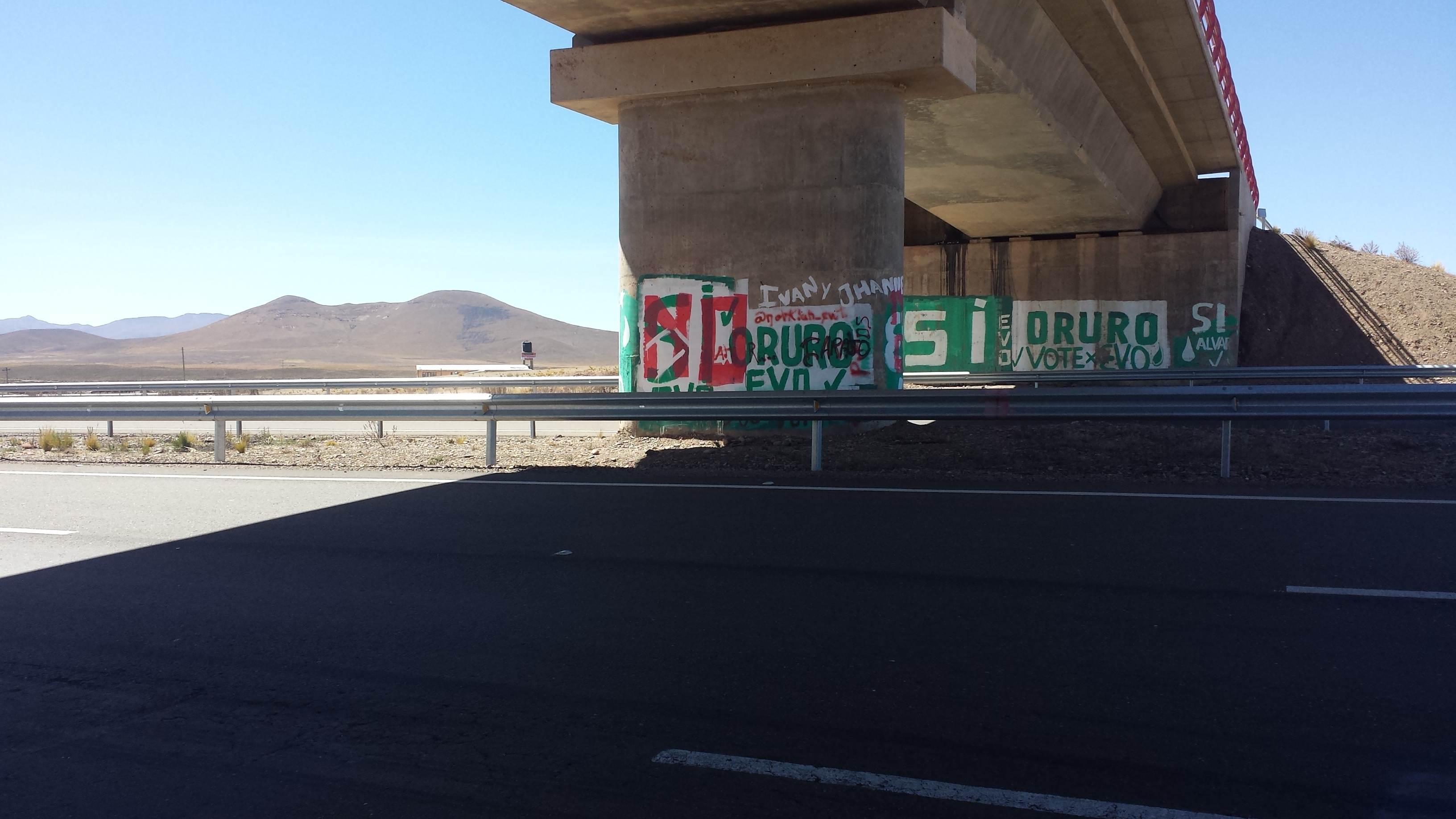
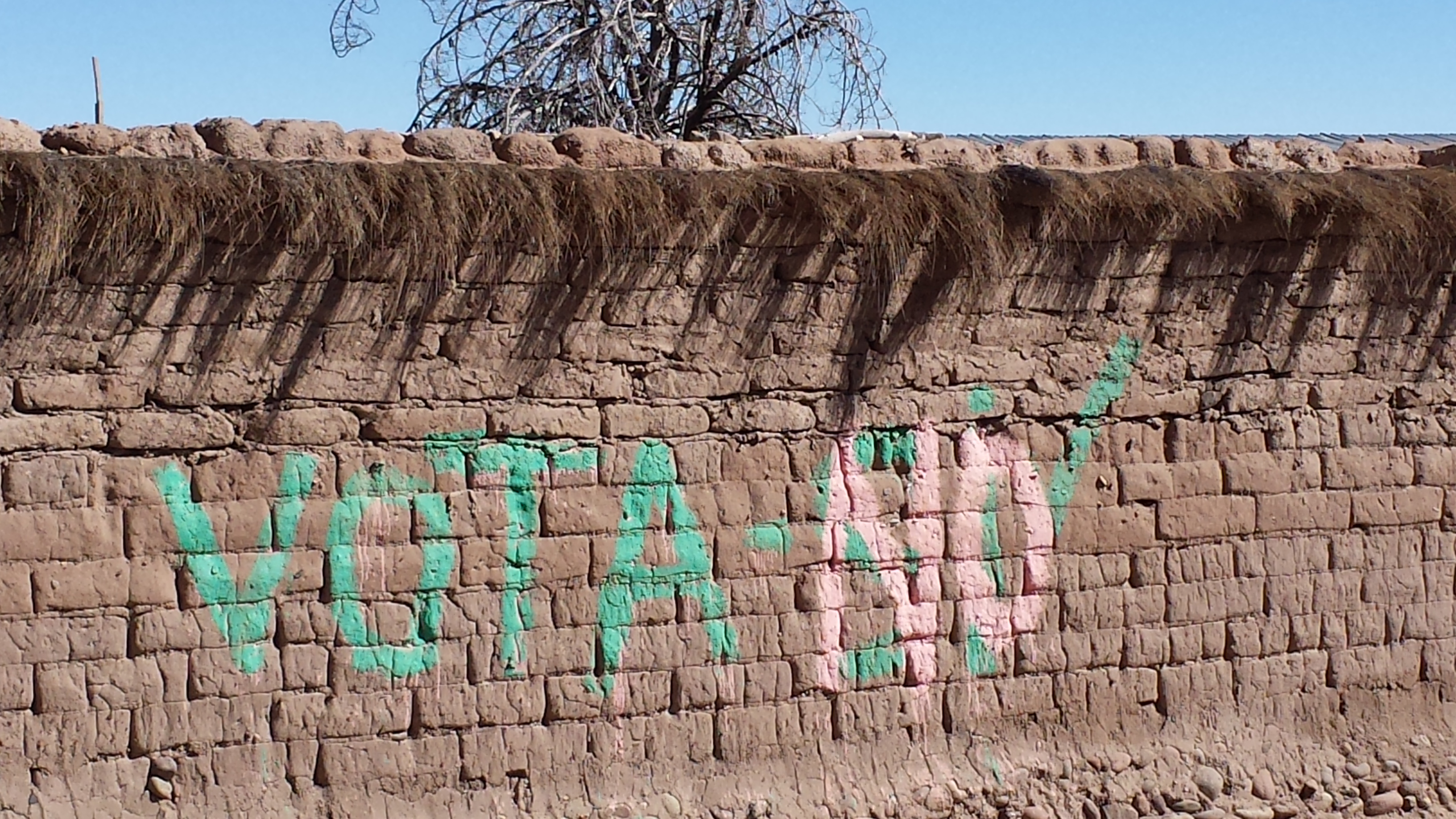
According to current policy presidential terms in Bolivia are five years and renewable only once. We already see graffiti calling for his re-election in 2025. “Evo si,” is the slogan. Sometimes painted over the official white and green graffiti is a red “no”.
The walls are a literal “ya-huh, nu-uh, ya-huh, nu-uh,” argument.
Under Evo’s policies, like the oil and gas sector, investors can own a maximum of 49% of a mine or project, with state-owned companies holding the majority. In 2014, the new Mining Law was signed, effectively dictating that contracts will be signed between private companies and COMIBOL (the government mining company). The first decree went into effect in 2007 after violence erupted between cooperative and COMIBOL miners. The protests and conflict resulted in a Bolivian deputy interior minister being beaten to death, 115 injuries, a shed of explosives blowing sky high and rendering two bodies of the 15 who died over the two days impossible to piece back together.
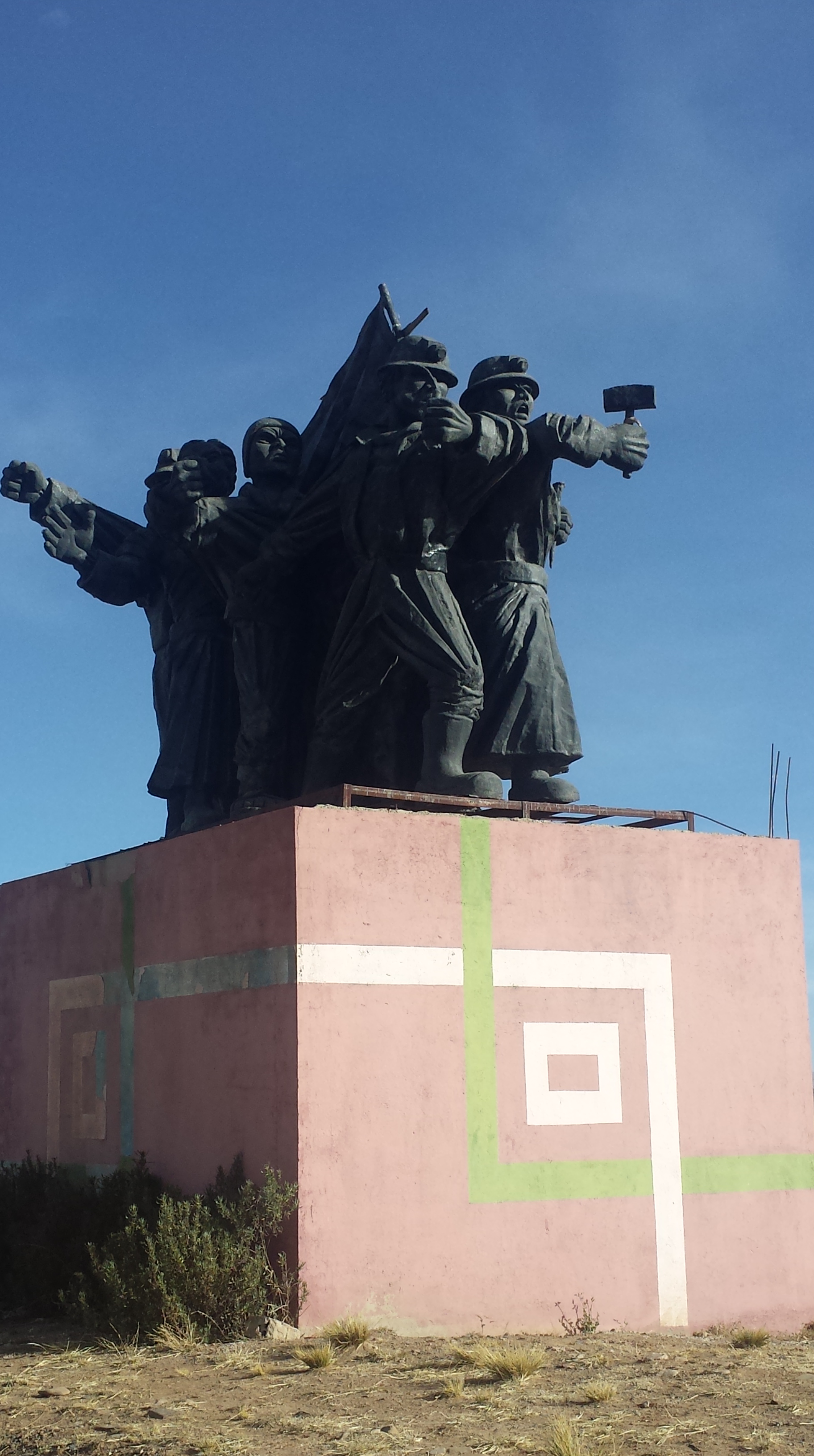
“Certainly you read about it,” our driver looks at me out of the corner of his eye, “we were in the international news.” It is two a.m. now, my mind is drifting. I would have been 20, then, occupied with college, studying abroad, myself, generally. I was not a 15 year old working in a mine, drinking contraband vicuña blood to buy myself a couple more years of life.
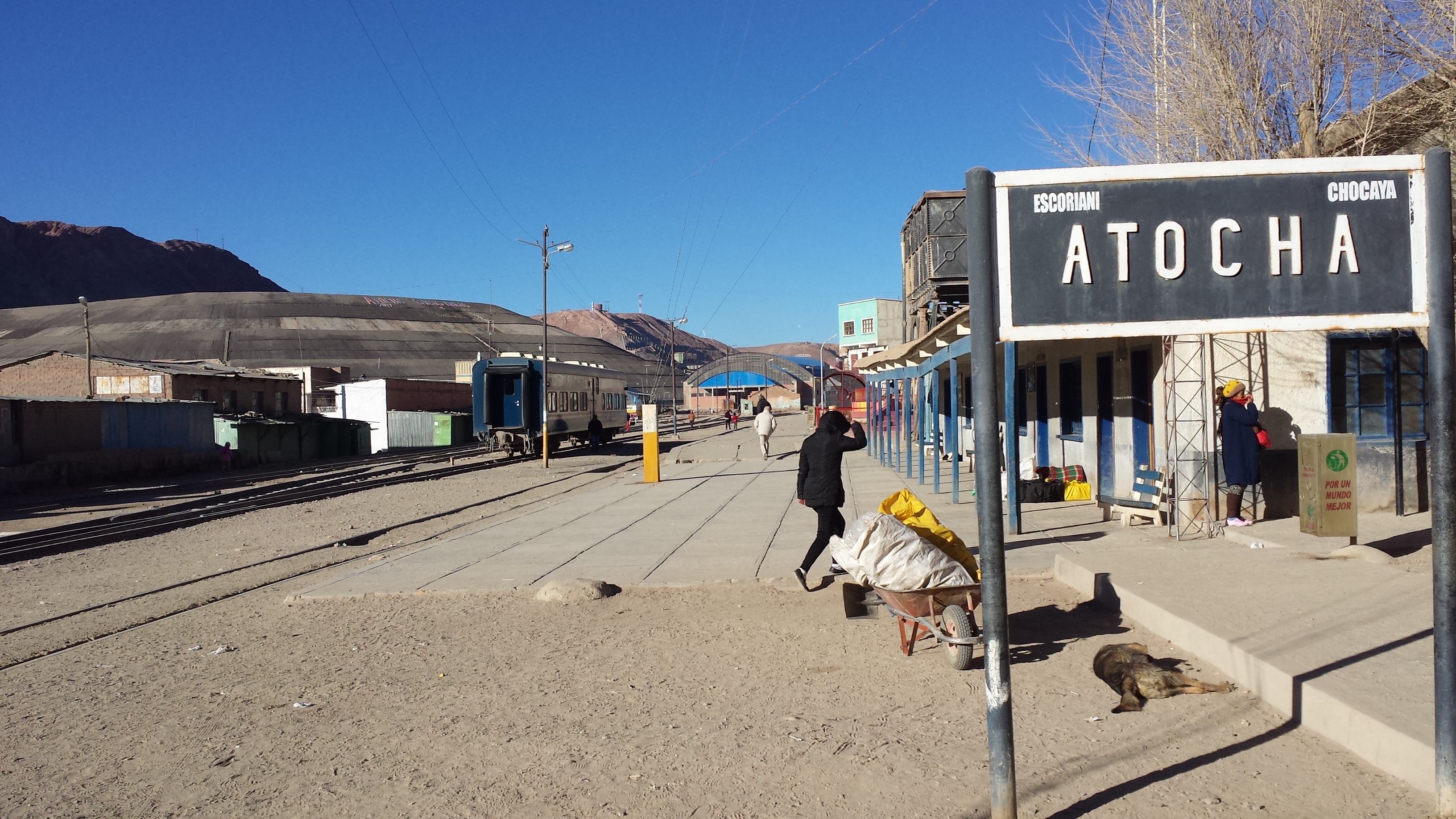
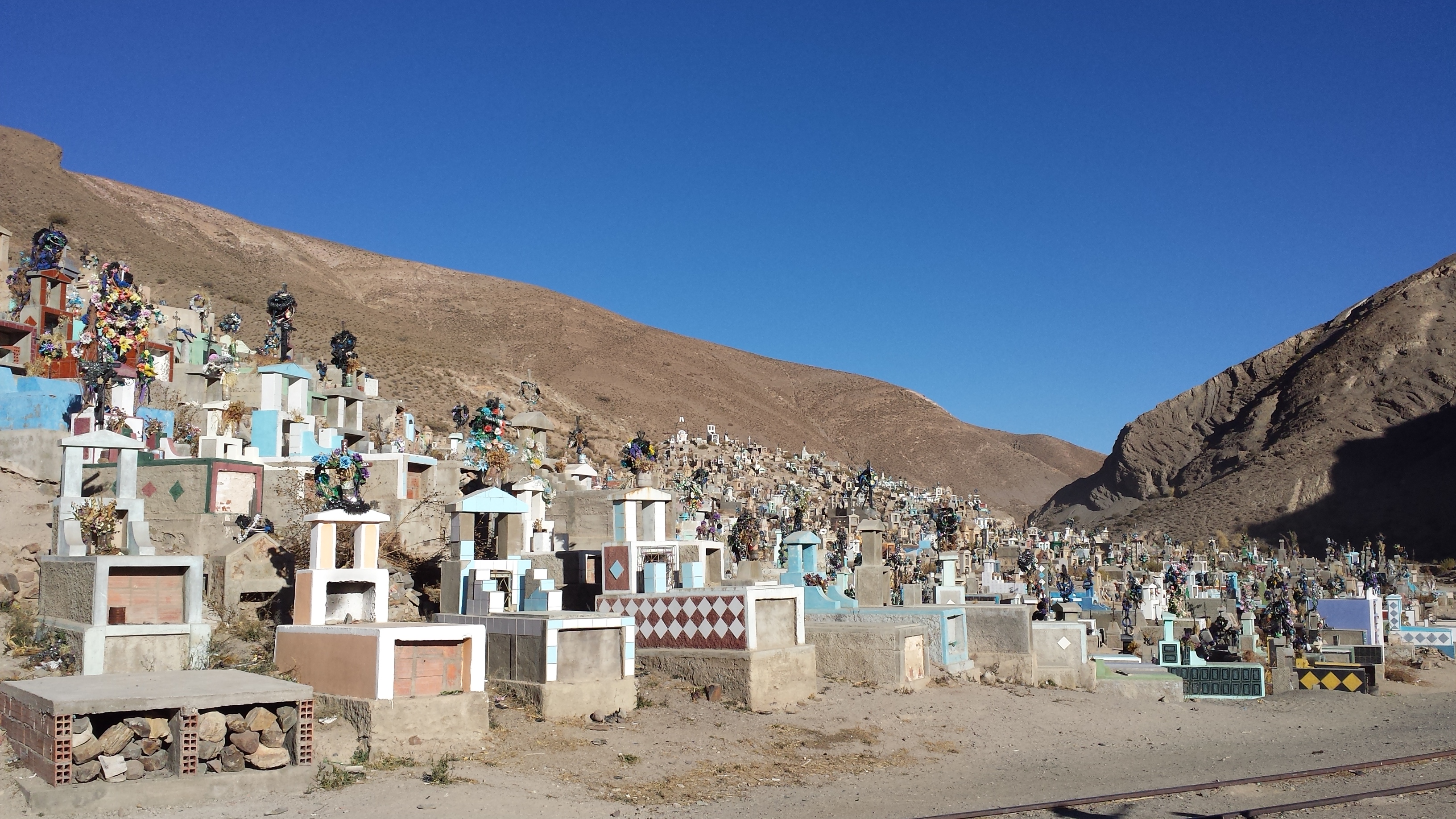
I think about the cemeteries outside each of the cities we pass through, the dates on the burial vaults which cover the hillsides.
How childbirth kills the women here, so the mines kill the men.
Yet both are their paths to the future.
Bolivia: una historia minera
Escrito por Fidgit
Traduccion por Henry Tovar
Era alrededor de la medianoche, íbamos de vuelta a la ciudad despues de un día de caminata y fuimos recogidas por un conductor de camión de la mina. “Cuando pueden, las familias retrasan el envío de sus niños a las minas hasta que nos graduamos de la escuela secundaria”, él mira hacia la oscuridad a través del volante cómicamente grande del semi, “porque una vez que empieces a entrar bajo tierra, solo tienes 10 o 20 buenos años de vida, pero la mayoría de ellos pasan a la clandestinidad a los 15 años porque su familia necesita el dinero “.
“Es la respiración que los mata, las minas nos dan máscaras pero después de un tiempo, los hombres dejan de usarlos, se meten en el camino”. Su padre y sus hermanos trabajaban en las minas alrededor de Huanuni, la mina de estaño más grande del país. Como el más joven de 9 niños, tuvo suerte; él es un conductor.
Bolivia es el país con mayor altitud de América del Sur, situado sobre reservas masivas de minerales naturales y recursos energéticos, pero sigue siendo el país más pobre del continente. La minería representa casi el 30% de las exportaciones bolivianas, su segunda fuente de ingresos. El depósito de Santa Isabel en Potosí alberga alrededor de 40 millones de toneladas de mineral que contiene plata, plomo, zinc, estaño y oro. El Salar de Uyuni se sitúa en 5,4 millones de toneladas de litio, la mayor concentración conocida, estimada en aproximadamente la mitad de la oferta mundial.
Pero los bolivianos simplemente se refieren a todo como “minerales”, y todos tienen al menos un miembro de la familia que trabaja en las minas. Mientras caminábamos, hemos visto una serie de pequeñas operaciones personales, excavadas a mano y con pala; también hemos pasado complejos masivos, con varias ciudades construidas alrededor de ellos.
No se supone que las vicuñas sean cazadas aquí”, comienza a retroceder, al parecer cambiando de tema aleatoriamente al omnipresente camello que puebla estos altos aviones, “pero la gente los caza de todos modos, porque los mineros creen que si bebes sangre de un vicuña, se obtienen otros 5 años de vida, además, su piel es muy cálida, por lo que es valiosa.Una manta de vicuña cuesta unos 7000 bolivianos (~ $ 1000 USD) “.
La vicuña es primo del ganaco, la alpaca, y el animal nacional de Bolivia, la llama.
Hay mucho nacionalizado en Bolivia, ya que el Presidente estos últimos 11 años es fuertemente izquierdista y socialista. Desde que Eduardo Rodríguez, el ex presidente (que según el consenso popular robó millones de dólares antes de irse a Estados Unidos), el voto indígena, que constituye el 62% de la población boliviana, eligió a Evo Morales, “tri-lingue” (hablando los tres idiomas principales en Bolivia: español, aymara y quechua).
Ha mejorado las infraestructuras de transporte (carreteras mejoradas, ferrocarriles y el nuevo sistema teleférico de La Paz), aumentando la calidad de vida general del boliviano medio (las tasas de mortalidad materna e infantil han disminuido y la esperanza de vida ha ido en aumento) , e hizo de la minería un inquilino central.
Si bien es considerado con escepticismo por los negocios internacionales y muchos países de fuera, la mayoría de los bolivianos hemos hablado de amarlo. Las leyendas alrededor de este hombre son contadas con gusto y se relacionan con el boliviano promedio: su educación empobrecida, sólo llevando una educación secundaria, reduciendo el salario presidencial en más del 75% tan pronto como él tomó el cargo, las respuestas benevolentes a la acción áspera por vecinos países; oímos por lo menos una historia semejante para cada vez que hicimos autostop. Él es uno de ellos, y sienten que finalmente tienen una voz y su mejor interés está siendo cuidado.
“Si vuelve a ser elegido en 2020, probablemente seguirá siendo nuestro Presidente”, dice nuestro conductor encogiéndose de hombros.
-¿Para quién votaste? Pregunto
“Votar en blanco La votación es obligatoria, si no se vota, no se puede sacar dinero del banco, así que quien revisa mi tarjeta lo llena”.
Según la política actual, los términos presidenciales en Bolivia son de cinco años y renovables una sola vez. Ya vemos graffiti llamando a su reelección en 2025. “Evo si”, es el lema. A veces pintado sobre el graffiti oficial blanco y verde es un rojo “no”.
Las paredes son un literal “ya-huh, nu-uh, ya-huh, nu-uh” argumento.
Bajo las políticas de Evo, como el sector de petróleo y gas, los inversionistas pueden poseer un máximo del 49% de una mina o proyecto, con empresas estatales que poseen la mayoría. En 2014, se firmó la nueva Ley de Minería, que dictaba efectivamente que se firmaron contratos entre empresas privadas y COMIBOL. El primer decreto entró en vigor en 2007 después de que la violencia estalló entre mineros cooperativos y COMIBOL. Las protestas y los conflictos provocaron la muerte de un viceministro boliviano del interior, 115 heridos, un cobertizo de explosivos que soplaba en el cielo y dejó a dos cuerpos de los 15 que murieron durante los dos días imposibles de recomponer.
“Ciertamente usted leyó sobre esto”, nuestro conductor me mira por el rabillo del ojo, “estábamos en las noticias internacionales”. Son las dos de la mañana, mi mente está a la deriva. Yo habría estado 20, entonces, ocupado con la universidad, estudiando en el extranjero, yo, generalmente. Yo no tenía 15 años de edad trabajando en una mina, bebiendo sangre de vicuña contrabando para comprarme un par de años más de vida.
Pienso en los cementerios que hay fuera de cada una de las ciudades por las que pasamos, las fechas en las bóvedas sepulcrales que cubren las laderas.
Cómo el parto mata a las mujeres aquí, así que las minas matan a los hombres.
Sin embargo, ambos son sus caminos hacia el futuro.


Comments (5)
seems so sad. and i am probably right. where did we as a species go so wrong?
I was talking to a 6,7, and 8yo trio of girls the other day. I asked them if they could travel anywhere in the world, where would the go. They said, Santa Cruz, a city only a few hours away.
I asked them what they wanted to be when they grew up and the 6 yo piped up, “we aren’t supposed to think about when we grow up.”
I realized that without parents having ambition for their kids to become something more the best they can do is enjoy life while they are little.
We were talking about it as we walked and came to this point where Neon said, “they seem hopeless.” Which got me to thinking about it. In some ways, in the way we use the term and know it you can only be hopeless if you have known hope. Many of these people never have.
Thank you for you insight into the country politics.
Thank you for reading!
Thanks for the revealing truth about life for the people of Bolivia. You give us readers a fresh view of what is real there.
Cliff and Martha